2027 PRESIDENCY: ATIKU, OBI, MAKINDE FACE TEST OF UNITY AS OPPOSITION COALITION PREPARES FOR ABUJA SUMMIT
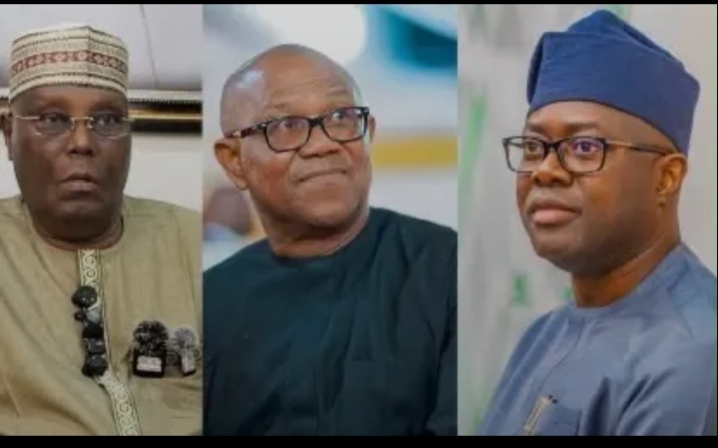
The discussions involving former Vice-President Atiku Abubakar, former Labour Party presidential candidate Peter Obi, and Oyo State Governor Seyi Makinde are part of the wider political conversations about building an opposition platform ahead of Nigeria’s 2027 general elections.
The major questions surrounding the discussions are:
1.Can the three political figures agree on a common political platform?
2. Will the coalition operate under the African Democratic Congress (ADC) or another political arrangement?
3. Who would emerge as the presidential candidate?
4.Would the coalition accommodate other opposition leaders, including Rotimi Amaechi, David Mark and other political stakeholders?
5.Can the coalition agree on a common strategy for challenging the APC
1. WHAT HAS ACTUALLY HAPPENED?
There are three important developments:
1. Makinde has confirmed the discussions. In a November 13 interview with ARISE News, he said he had engaged Atiku and Obi and that the discussions were ongoing.
2. A unity agreement is being pursued. Six opposition parties and political factions are working towards a cooperation agreement, with a summit scheduled for November 30, 2026, in Abuja.
3. The presidential ticket remains unresolved. Atiku, Obi and Makinde are associated with different party platforms and presidential ambitions.
Importantly, this is not yet evidence that any of the three has agreed to withdraw his presidential ambition in favour of another.
2. WHAT ARE NIGERIANS AND POLITICAL STAKEHOLDERS SAYING?
Here are the major positions emerging from public comments and media reports.
A. THOSE SUPPORTING OPPOSITION UNITY
Supporters of the coalition see cooperation as an opportunity to prevent opposition votes from being divided among several presidential candidates.
They want the opposition to agree on:
1. One presidential candidate, if possible.
2. A common national development programme.
3. Joint campaign arrangements.
4. Coordinated protection of votes during the election.
Coalition coordinator Salihu Lukman has discussed a framework for democratic renewal, opposition cooperation and electoral integrity.
B. THOSE SUPPORTING PETER OBI
Some Obi supporters believe the coalition should rally around the NDC presidential ticket of Peter Obi and Rabiu Kwankwaso.
The NDC’s communication director has publicly expressed a preference for other opposition politicians to support the Obi–Kwankwaso ticket.
C. THOSE SUPPORTING ATIKU
Atiku’s supporters maintain that he is already the ADC presidential candidate and that any coalition arrangement must respect the party’s existing political structure and nomination.
The disagreement is therefore not simply about unity; it is also about who should lead the proposed alliance.
D. THOSE SUPPORTING MAKINDE
Makinde has presented himself as willing to negotiate with either Atiku or Obi. He has said that the decision should be based on manifestos, previous performance and public sentiment, rather than personal loyalty or emotion.
E. THE APC’s RESPONSE
The APC’s Director of Publicity, Bala Ibrahim, dismissed the proposed alliance as a threat to neither the party nor President Tinubu’s re-election plans. He acknowledged that the APC would face challenges but expressed confidence in its grassroots support.
3. CONTROVERSY OVER MAKINDE STEPPING DOWN FOR ATIKU Atiku
One particularly interesting development is the rumour that Makinde would withdraw his presidential ambition in favour of Atiku.
Makinde’s campaign account publicly labelled that report fake news on November 26.
Therefore, it would be inaccurate to report that Makinde has agreed to step down for Atiku.
4. THE NOVEMBER 30 ABUJA MEETING
The opposition coalition is expected to hold its second summit in Abuja on Monday, November 30.
The proposed agreement is expected to address:
* Democratic renewal.
* Opposition unity.
* Electoral integrity.
* Joint political cooperation.
* A common framework for national reforms.
However, whether the summit will produce agreement on one presidential candidate remains uncertain.
5. INDEPENDENT ASSESSMENT OF THE POLITICAL SITUATION
There are four major obstacles the opposition must resolve:
1. The presidential ticket: Atiku, Obi and Makinde have their own political ambitions and supporters.
2. Political platform: Their parties must agree on how to cooperate without destroying their existing structures.
3. Regional interests: The North, South-West, South-East and South-South must feel adequately represented.
4. Trust and leadership: The leaders must agree on a transparent method of selecting a common candidate and sharing responsibilities.
The November 30 meeting will be an important opportunity to test whether their discussions can translate into an organised political agreement